7 Signs You’re Clenching Your Jaw at Night (Even If You Don’t Realize It)
If you wake up with a headache, tight jaw, or stiff neck, you might assume you slept wrong or had a stressful day. But many women over 40 are dealing with something they don’t even realize is happening while they sleep: jaw clenching.
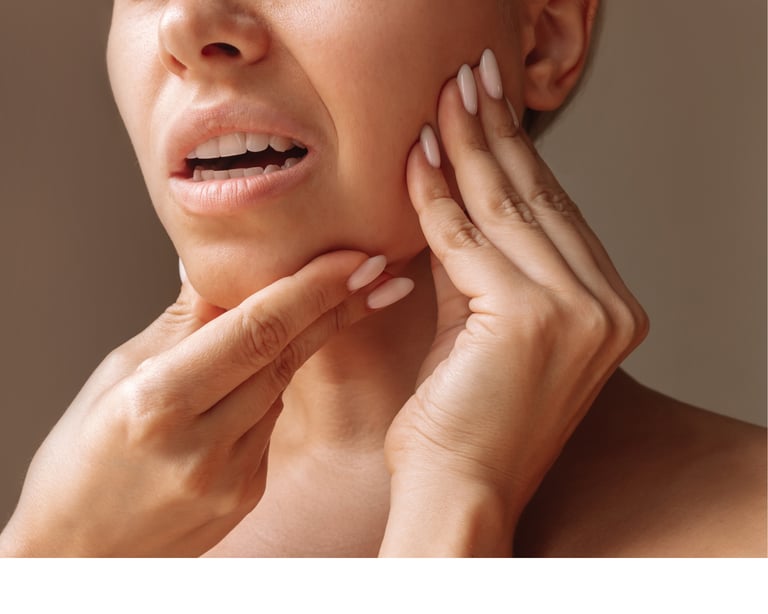
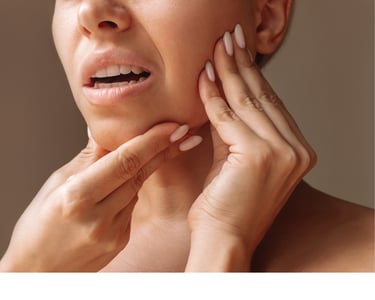
Nighttime clenching (often called bruxism) can put tremendous pressure on the jaw joint, muscles, teeth, and nerves. Over time, this tension can lead to headaches, jaw pain, neck stiffness, and even ear discomfort.
The tricky part? Most people don’t know they’re doing it.
Below are seven common signs that your body may be clenching your jaw while you sleep.
1. You Wake Up With Morning Headaches
One of the most common signs of nighttime jaw clenching is waking up with a dull, pressure-like headache.
These headaches often feel like:
tightness around the temples
pressure across the forehead
a “band-like” tension around the head
This happens because the temporalis and masseter muscles, which are responsible for closing the jaw, can stay activated for hours during sleep.
Imagine clenching your fist all night.
That same constant tension can happen in the muscles around your jaw and temples.
By morning, those muscles are fatigued and irritated, which can trigger headaches.
2. Your Jaw Feels Tight or Sore in the Morning
If your jaw feels stiff when you first wake up, your muscles may have been working overtime during the night.
Common symptoms include:
jaw soreness
difficulty opening wide in the morning
a feeling of tightness along the cheeks or jawline
Clenching puts significant pressure on the temporomandibular joint (TMJ), which connects your jaw to your skull.
Over time, that pressure can irritate the surrounding muscles and tissues, leading to morning stiffness.
Many people notice the jaw loosens up after eating or talking for a while.
3. Your Teeth Feel Sensitive or Sore
Another surprising sign of nighttime clenching is tooth sensitivity in the morning.
When someone clenches their jaw, the force placed on the teeth can be enormous. In fact, the masseter muscle is one of the strongest muscles in the body.
That pressure can lead to:
sore teeth when waking up
sensitivity to cold
small hairline cracks in enamel
flattened tooth edges
Dentists often spot clenching by noticing unusual tooth wear patterns.
4. You Have Neck and Shoulder Tension
Many people don’t realize how closely the jaw muscles connect with the neck and upper shoulders.
When the jaw muscles stay tense overnight, surrounding muscles often compensate.
This can lead to:
neck stiffness
shoulder tightness
tension headaches
pain at the base of the skull
For many women, jaw clenching and neck pain happen together.
5. Your Jaw Clicks or Pops
If your jaw clicks, pops, or shifts when opening or chewing, it may be a sign that the joint is under stress.
The TMJ contains a small disc that helps cushion the joint during movement.
When the joint is overloaded from clenching or grinding, this disc can shift slightly, which sometimes causes clicking sounds.
Occasional clicking without pain is common, but persistent clicking combined with pain or stiffness should be evaluated by a professional.
6. You Wake Up Feeling Like You Didn’t Rest
Nighttime clenching is often linked to stress and nervous system activity during sleep.
When the body stays in a heightened stress state, muscles may remain partially activated throughout the night.
That can lead to:
restless sleep
jaw tension
waking up feeling tired or wired
Many women describe feeling like their body was “tense all night.”
7. You Notice Indentations on Your Tongue or Cheeks
One of the simplest signs of jaw clenching is something many people overlook.
Check your tongue in the mirror.
If you notice scalloped edges along the sides, it may mean your tongue is being pressed against your teeth during sleep.
Similarly, some people develop small ridges inside the cheeks where the teeth press during clenching.
Why Jaw Clenching Often Starts After 40
Many women begin noticing these symptoms in their late 30s or 40s.
Several factors may contribute:
increased life stress
hormonal changes
sleep disruption
muscle tension patterns
airway or breathing changes during sleep
These factors can increase nervous system activation, making nighttime clenching more likely.
What Actually Helps
If you suspect you may be clenching your jaw at night, there are several helpful steps that may reduce symptoms:
Improve jaw and neck posture
Forward head posture can increase tension on the jaw muscles.
Reduce stress before sleep
Relaxation routines and nervous system calming can reduce nighttime muscle tension.
Support muscle recovery
Magnesium and hydration may help relax overactive muscles.
Avoid daytime clenching habits
Many people unknowingly clench during the day.
Consider dental evaluation
A dentist may recommend a night guard if tooth wear is present.
A Simple Self-Check
If several of these signs sound familiar, it may be worth doing a quick self-check.
I created a simple checklist that helps you identify whether jaw clenching may be contributing to headaches, jaw pain, or neck tension. (coming soon!)
You can download it here:
Free Jaw Clench Self-Check
You're Not the Only One Experiencing This
Many women over 40 struggle with unexplained headaches, jaw tightness, or neck pain.
Often, jaw clenching is the missing piece that connects those symptoms.
The good news is that once you understand what’s happening, there are practical ways to reduce tension and support your jaw and nervous system.
Small changes can make a meaningful difference.
If you want to understand why these symptoms are so common for women over 40, read this article explaining the connection between jaw clenching, headaches, and neck tension:
Connect
© 2025. All rights reserved.
As an Amazon Associate, I earn from qualifying purchases. This site contains affiliate links. I may receive a commission if you purchase through my links, at no extra cost to you
About Megan @The Steady Reset-
Hi there- I'm Megan, a dental hygienist of 20+ years with training in myofunctional therapy. My passion is helping women over 40 understand the connection between jaw tension, headaches, breathing, and sleep.
My goal with The Steady Reset is to help women wake up feeling relaxed instead of tight and exhausted.